
Arabic Month Names: A Complete Guide
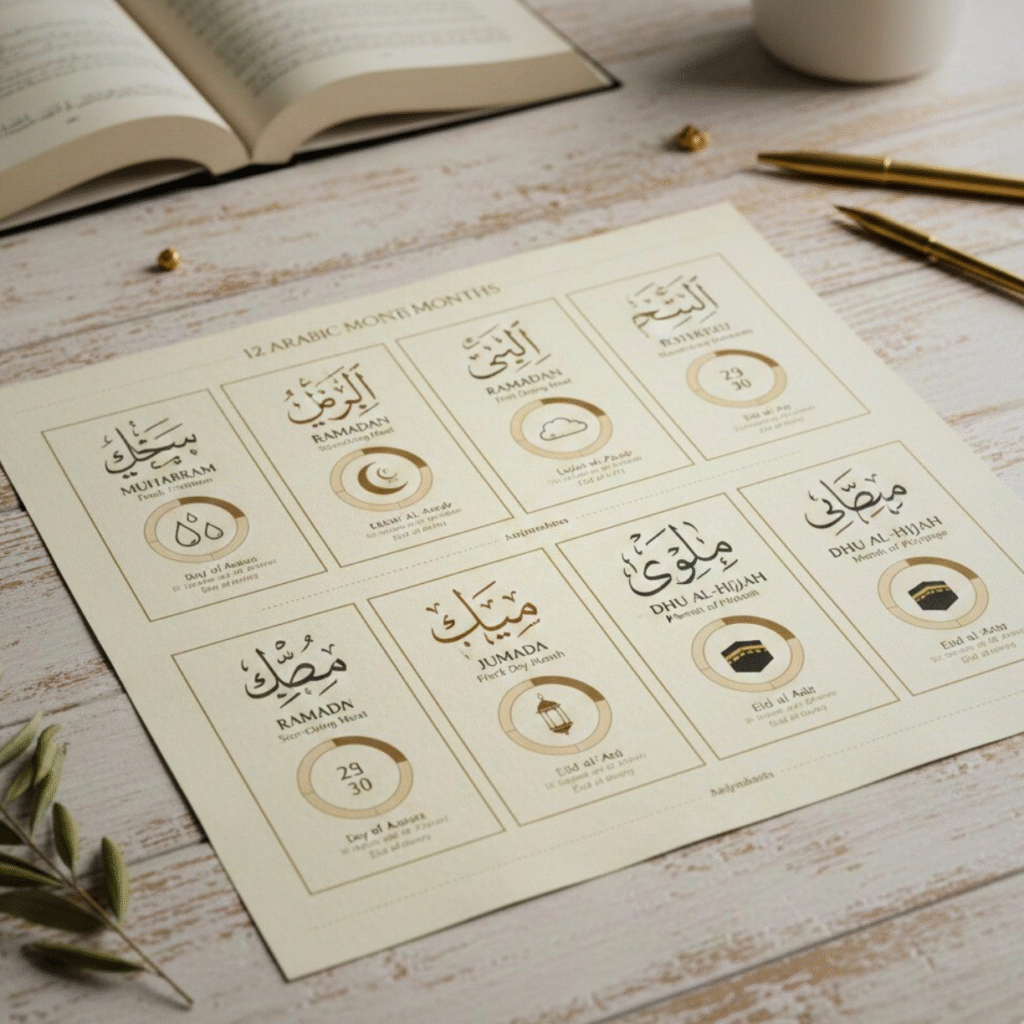
Arabic month names are central to the Hijri (Islamic) lunar calendar, guiding religious observances, cultural events, and personal planning across Muslim communities globally. From Muharram to Dhu al-Hijjah, each month carries historical, cultural, and religious significance. This guide covers all 12 months, their meanings, observances, Gregorian equivalents, and practical uses for individuals, educators, and businesses.
What Are Arabic Month Names?
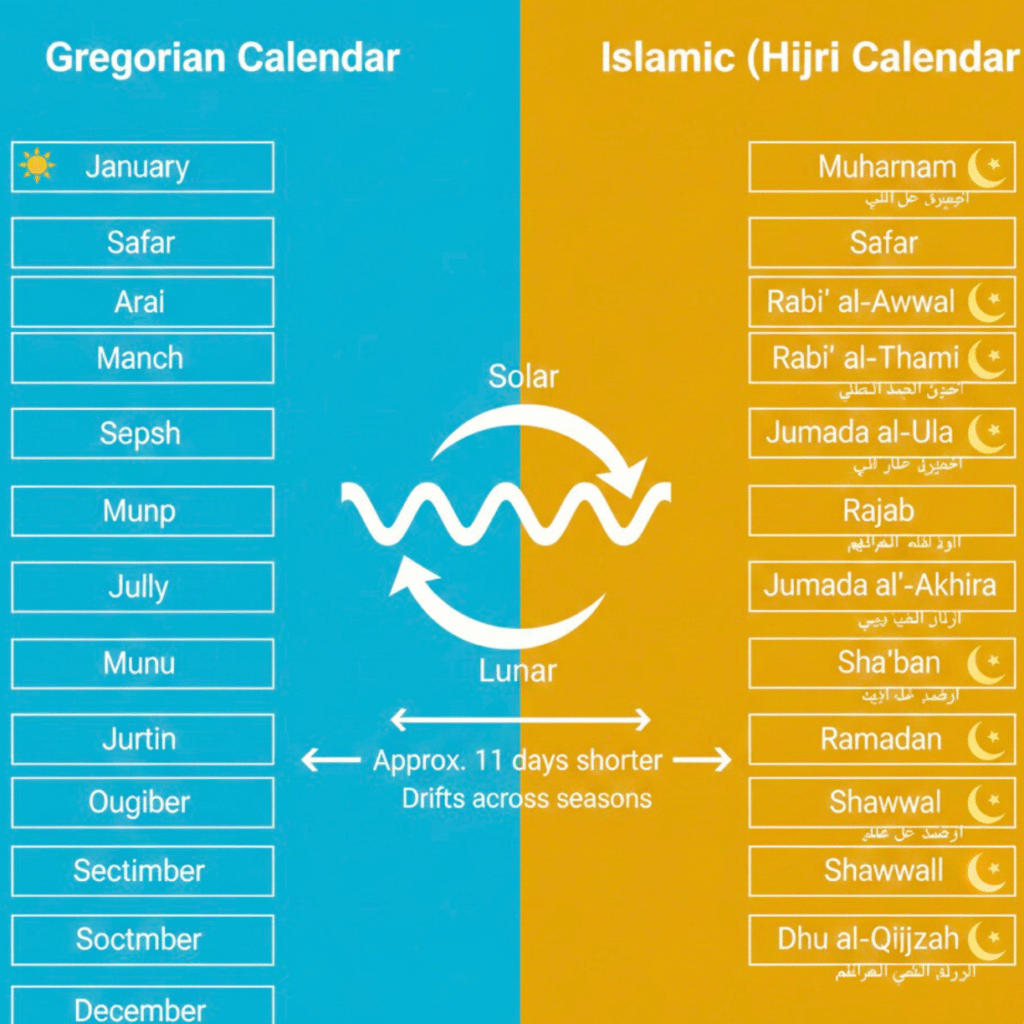
The Arabic months form the Islamic lunar calendar, which is based on the cycles of the moon rather than the solar year. Unlike the Gregorian calendar, which has a fixed 365-day year, the Hijri year has 354–355 days, with months lasting 29 or 30 days depending on moon sightings.
This calendar is widely used for:
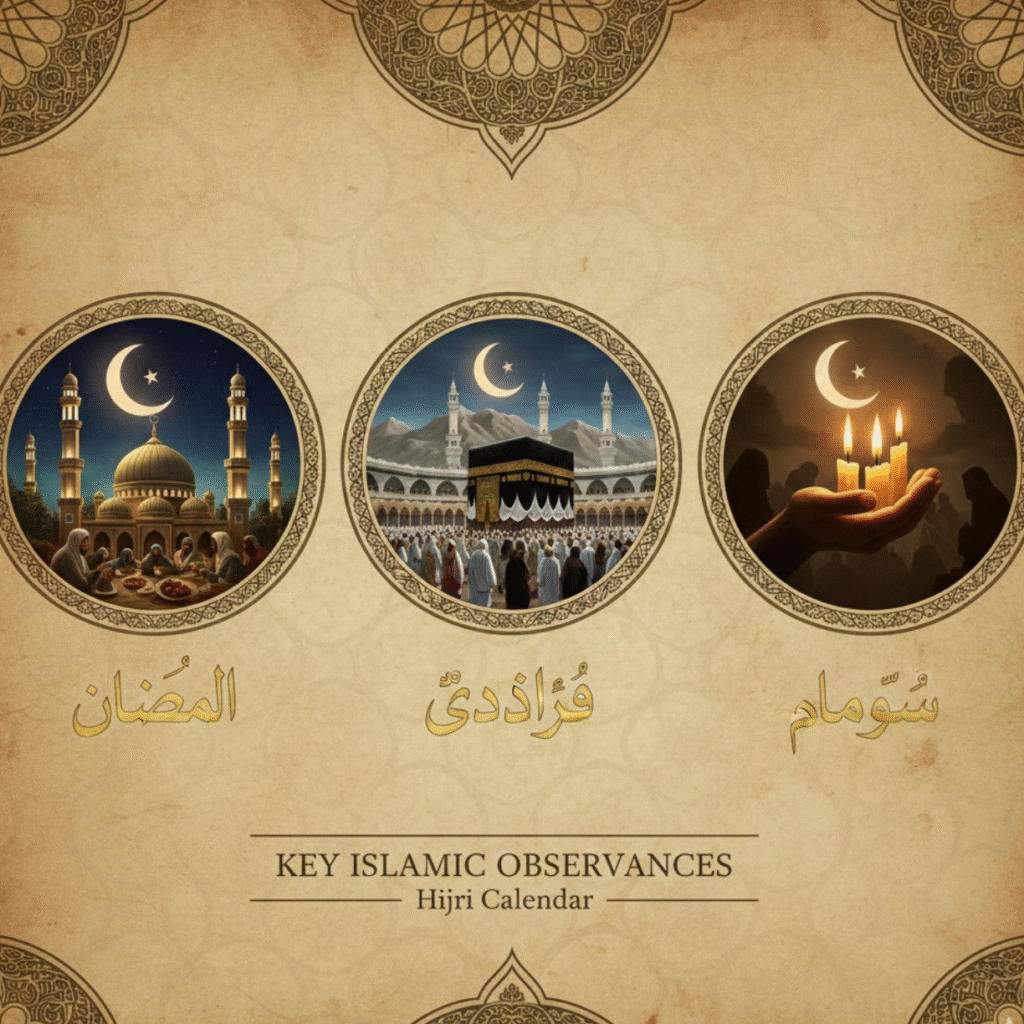
- Religious observances: Ramadan, Hajj, Eid celebrations
- Cultural events: Historical commemorations and festivals
- Academic and business planning: Aligning global events with lunar months
Why Arabic Month Names Matter
Understanding Arabic months is important for several reasons:
- Religious Alignment: Fasting during Ramadan, Hajj pilgrimage planning, and observing Ashura require accurate knowledge of the months.
- Cultural Literacy: Arabic month names reflect centuries of tradition, historical events, and regional practices.
- Event Planning: Businesses and educational institutions can schedule events accurately across Muslim-majority regions.
- Conversion Accuracy: Aligning lunar months with the Gregorian calendar ensures consistency for international communication.
List of Arabic Months with Meanings
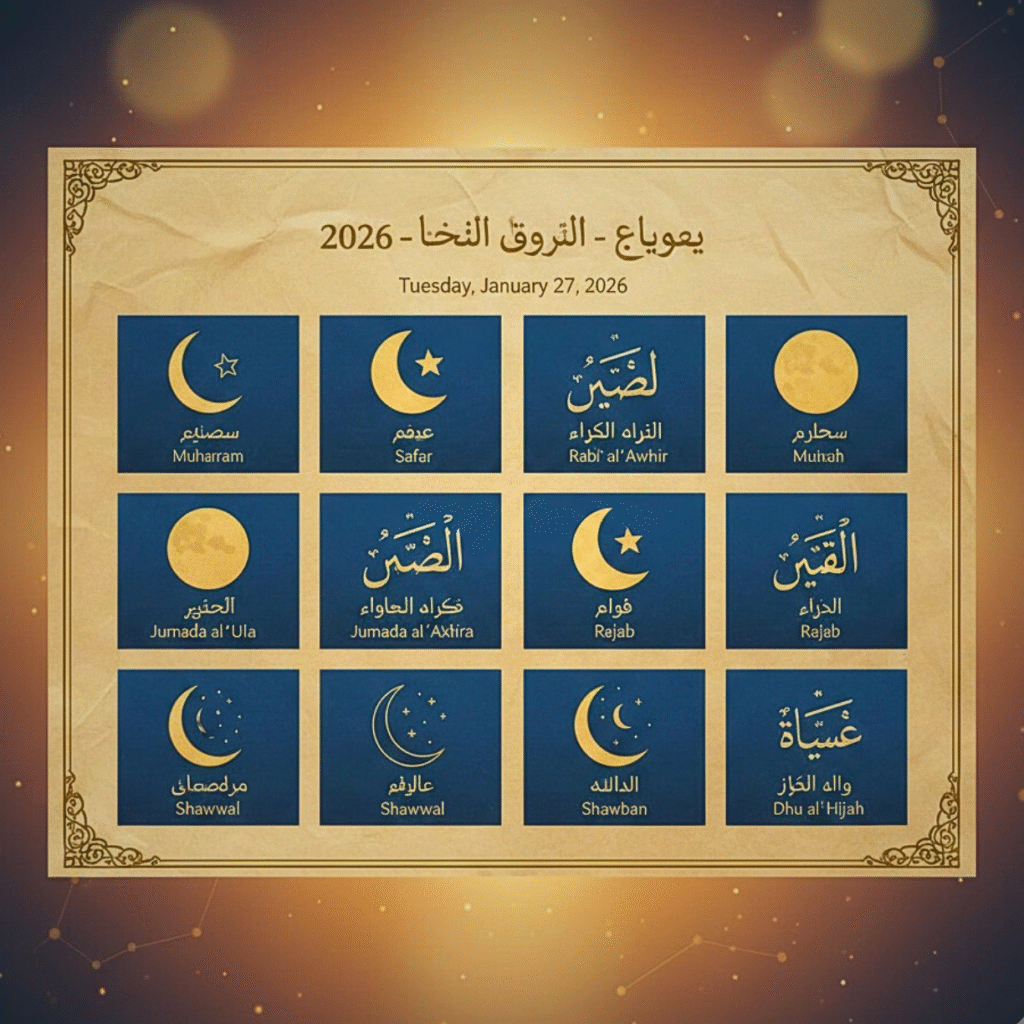
| Month Name (Arabic) | Transliteration | Meaning & Notes | Days | Key Observances |
| محرم | Muharram | Sacred month, fighting forbidden | 29–30 | Ashura (10th day) |
| صفر | Safar | Traditionally associated with travel | 29–30 | Cultural events |
| ربيع الأول | Rabi’ al-Awwal | First month of spring | 29–30 | Mawlid al-Nabi (Prophet Muhammad’s birthday) |
| ربيع الآخر | Rabi’ al-Thani | Second spring month | 29–30 | Regional commemorations |
| جمادى الأولى | Jumada al-Awwal | Winter month | 29–30 | Local historical events |
| جمادى الآخرة | Jumada al-Thani | Last winter month | 29–30 | Community festivals |
| رجب | Rajab | Sacred month, preparation for Ramadan | 29–30 | Isra & Mi’raj observance |
| شعبان | Sha’ban | Pre-Ramadan month | 29–30 | Mid-Sha’ban celebrations |
| رمضان | Ramadan | Fasting month | 29–30 | Ramadan fasting, Laylat al-Qadr |
| شوال | Shawwal | Post-Ramadan month | 29–30 | Eid al-Fitr |
| ذو القعدة | Dhu al-Qi’dah | Pilgrimage preparation | 29–30 | Pre-Hajj rituals |
| ذو الحجة | Dhu al-Hijjah | Hajj month | 29–30 | Hajj, Eid al-Adha |
Differences Between Gregorian and Arabic Calendars
| Feature | Gregorian Calendar | Arabic (Hijri) Calendar |
| Basis | Solar (365 days) | Lunar (354–355 days) |
| Months | 12 fixed | 12 lunar, flexible |
| Year Start | Jan 1 | Muharram 1 |
| Use | Civil, global | Religious, cultural |
| Leap Adjustment | Every 4 years | Moon sightings adjust month length |
Key Note: Observance dates such as Ramadan or Hajj can shift by 1–2 days annually depending on moon sightings and regional committees.
How to Convert Arabic Months to Gregorian
- Identify the Hijri month using an official calendar or app.
- Check moon sighting reports for the relevant region.
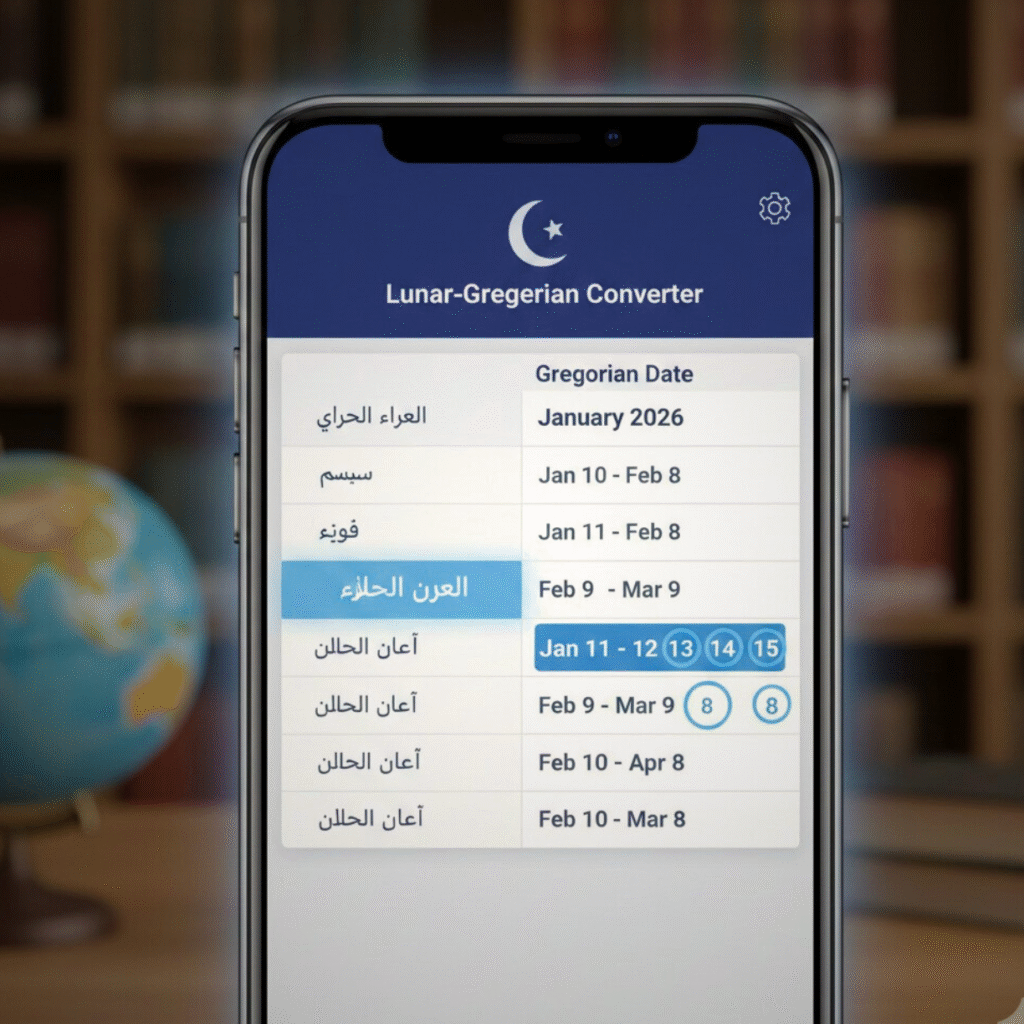
- Use online converters or official lunar calendar apps like IslamicFinder or Muslim Pro.
- Adjust for local variations, especially in UAE, Saudi Arabia, or Indonesia.
- Align with Gregorian dates for scheduling events, business planning, or international communication.
Pro Tip: Conversion tools vary, so always verify against regional moon sighting authorities for official observances.
Regional Variations in Observance
- Middle East: UAE, Saudi Arabia, and Egypt coordinate based on official moon sighting committees.
- North Africa: Morocco and Algeria often announce lunar months with local cultural celebrations.
- Asia: Indonesia, Pakistan, and Malaysia rely on community-based sightings to start Ramadan or Hajj planning.
Voice-Search Use Cases:
- “When is Ramadan 2026 in Dubai?”
- “Eid al-Fitr date near me”
- “Muharram calendar 2026 UAE”
Using Arabic Month Names in Daily Life
- Religious Practice: Plan fasting, prayers, or Hajj journeys accurately.
- Education: Teach students the order, meanings, and significance of months.
- Event Planning: Align cultural or business events with lunar months.
- Digital Tools: Use Hijri calendar apps for notifications and date conversion.
Common Mistakes and Misunderstandings
- Assuming lunar months always match Gregorian months.
- Treating all months as having exactly 30 days.
- Ignoring regional variations in moon sightings.
- Confusing cultural significance between countries or regions.
Solution: Consult official lunar calendars and apps, and cross-check with local authorities.
Tools and Resources
- Apps: IslamicFinder, Muslim Pro, Hijri Calendar Apps
- Websites: MoonCalc.org, local Islamic authority portals
- Physical Tools: Wall calendars, planners, educational charts
Pricing: Digital and physical calendars range from $5–$25 depending on format and regional details.
Historical and Cultural Significance
Arabic months are not only time markers but also cultural artifacts reflecting centuries of history:
- Muharram: Known as a sacred month, central to Ashura commemorations.
- Ramadan: Month of fasting and reflection, tied to the Qur’an.
- Dhu al-Hijjah: Core for Hajj pilgrimage, one of the five pillars of Islam.
Understanding these months provides insights into Islamic history, regional traditions, and social customs globally.
Alternatives and Variants
- Tabular Hijri Calendars: Align lunar months with Gregorian dates in a single view.
- Scientific Moon-Based Calculators: Predict lunar months accurately for planning.
- Regional Pronunciation Variations: Differences exist between Gulf, North African, and Southeast Asian countries.
Best Practices
- Validate dates with local committees for accuracy.
- Teach or display month names in bilingual formats when applicable.
- Integrate months into planning apps or tools for global or regional use.
- Highlight cultural significance for education and engagement.
Arabic Month Names FAQ
- What is the first Arabic month?
The first Arabic month is Muharram, a sacred month in the Islamic calendar. - How many days are in each Arabic month?
Months last 29 or 30 days, depending on moon sightings. - When does Ramadan start in 2026?
Exact dates vary by region, but Ramadan is the ninth month of the Hijri calendar, starting based on moon sighting announcements. - What is the difference between Hijri and Gregorian calendars?
The Hijri calendar is lunar-based with 354–355 days, while the Gregorian calendar is solar-based with 365 days. - How do I convert Arabic months to Gregorian dates?
Use official apps, online converters, or consult local moon sighting committees for accuracy. - Are Arabic months used worldwide?
They are primarily used in Muslim-majority regions but recognized globally in religious, educational, and cultural contexts. - What is the meaning of each Arabic month?
Each month carries specific religious or historical significance, such as fasting in Ramadan or pilgrimage in Dhu al-Hijjah. - Can Hijri months shift?
Yes, lunar months can shift by a day depending on moon sighting and regional declarations. - How are Arabic months determined?
Months begin with the first sighting of the lunar crescent, confirmed by religious authorities.
Conclusion
Arabic month names are more than a calendar system—they are a gateway to cultural understanding, religious observance, and global planning. From Muharram to Dhu al-Hijjah, these months guide fasting, festivals, and historical commemorations. By understanding the order, meanings, and observances, individuals, educators, and businesses can align personal, academic, and professional activities with the lunar calendar effectively.
Using apps, official lunar announcements, and bilingual educational resources ensures accuracy while respecting cultural traditions worldwide. Mastering Arabic month names connects history, religion, and modern planning seamlessly across regions.

Muhammad Rehan
SEO Expert with 7+ Years of Experience
With over seven years of experience in Search Engine Optimization, I specialize in enhancing website visibility, driving organic traffic, and boosting online presence for businesses. My expertise spans technical SEO, content optimization, keyword research, link building, and data analytics. I have a proven track record of improving search rankings, enhancing user experience, and delivering measurable results for clients across various industries.